Welcome
Suhalia’s silliest, longest-running, most expensive, least successful, and generally speaking most superlative project is an expedition to recreate the kites of Alexander Graham Bell.
The story, as I understand it, is that Bell took his telephone winnings and retreated to an estate in Nova Scotia for a protracted period of estivation and rustication. There, alongside some handsome young fellows clad in overalls in his atelier, Bell entered the race for manned flight. His bet was not on the bi-plane, popular among experimenters in Ohio and at Issy-les-Moulineaux, or the airship, popular in Friedrichshafen, but rather the kite.
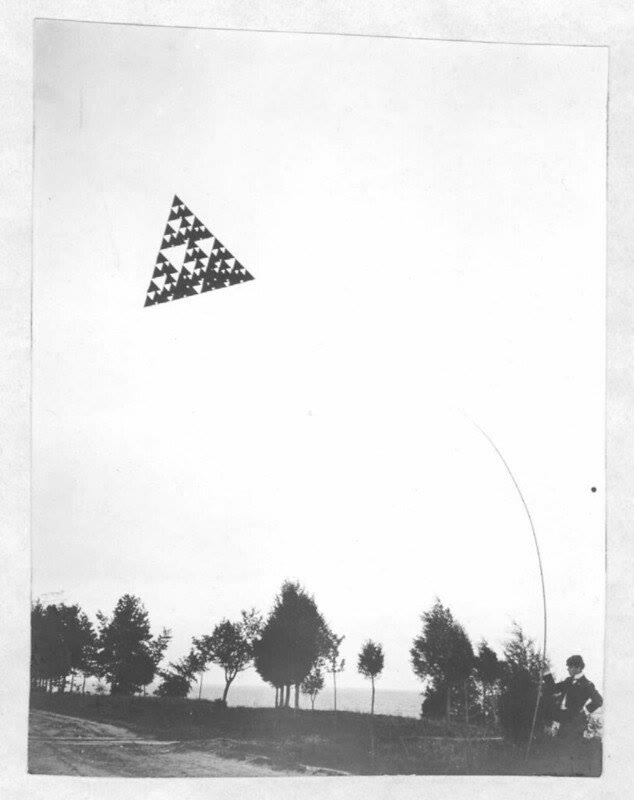
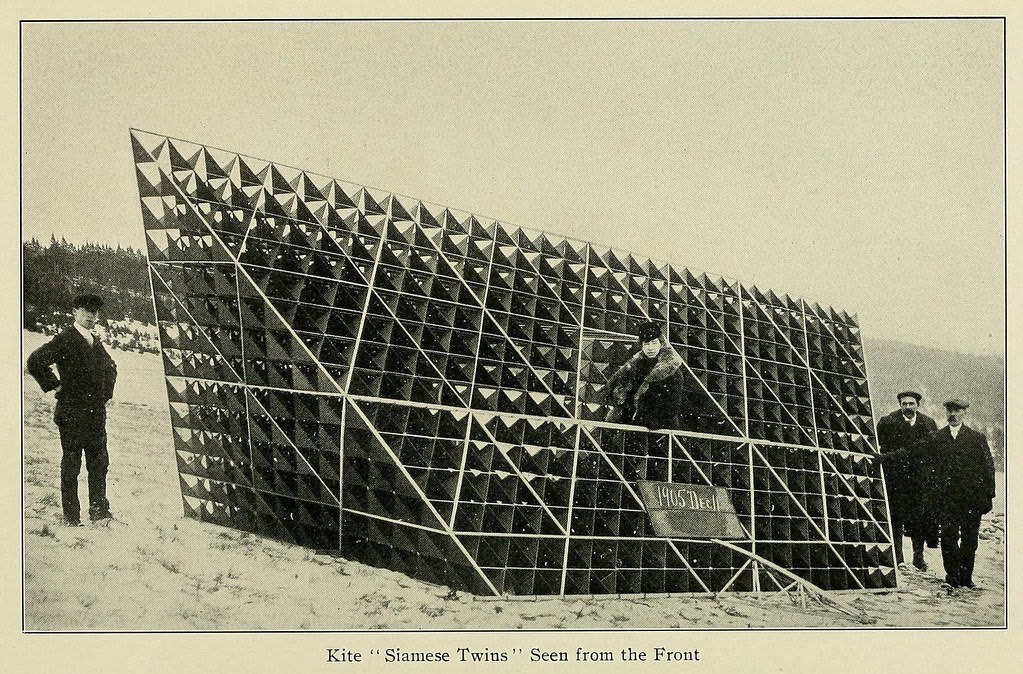
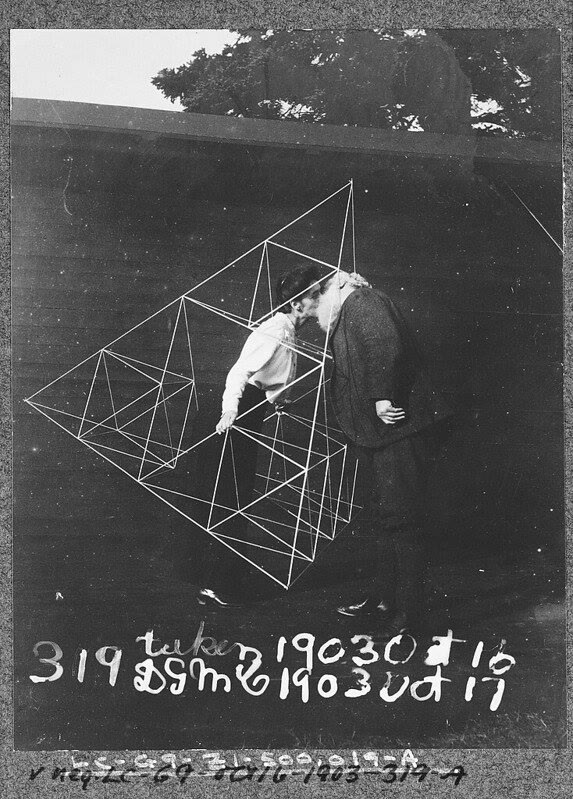
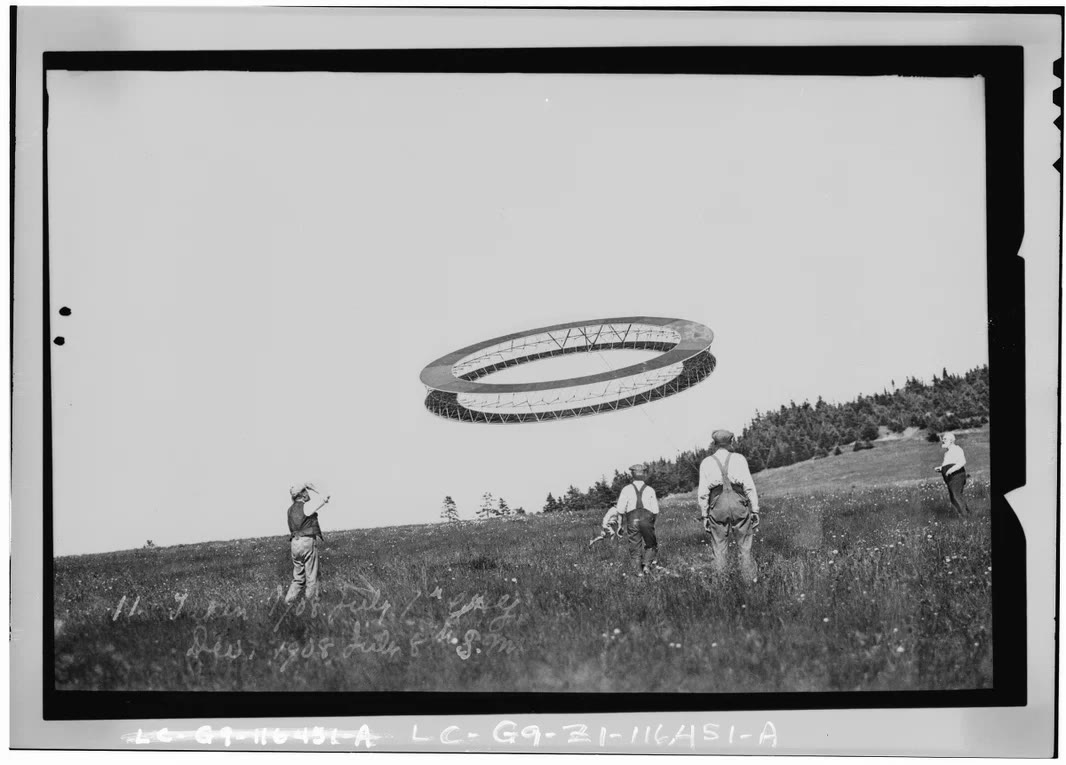
His kites were strange and beautiful and exotic. Some featured hundreds and eventually thousands of winged tetrahedral cells stitched together. The photos are so spectacular as to be almost surreal.
The Dream
Prototype Zero
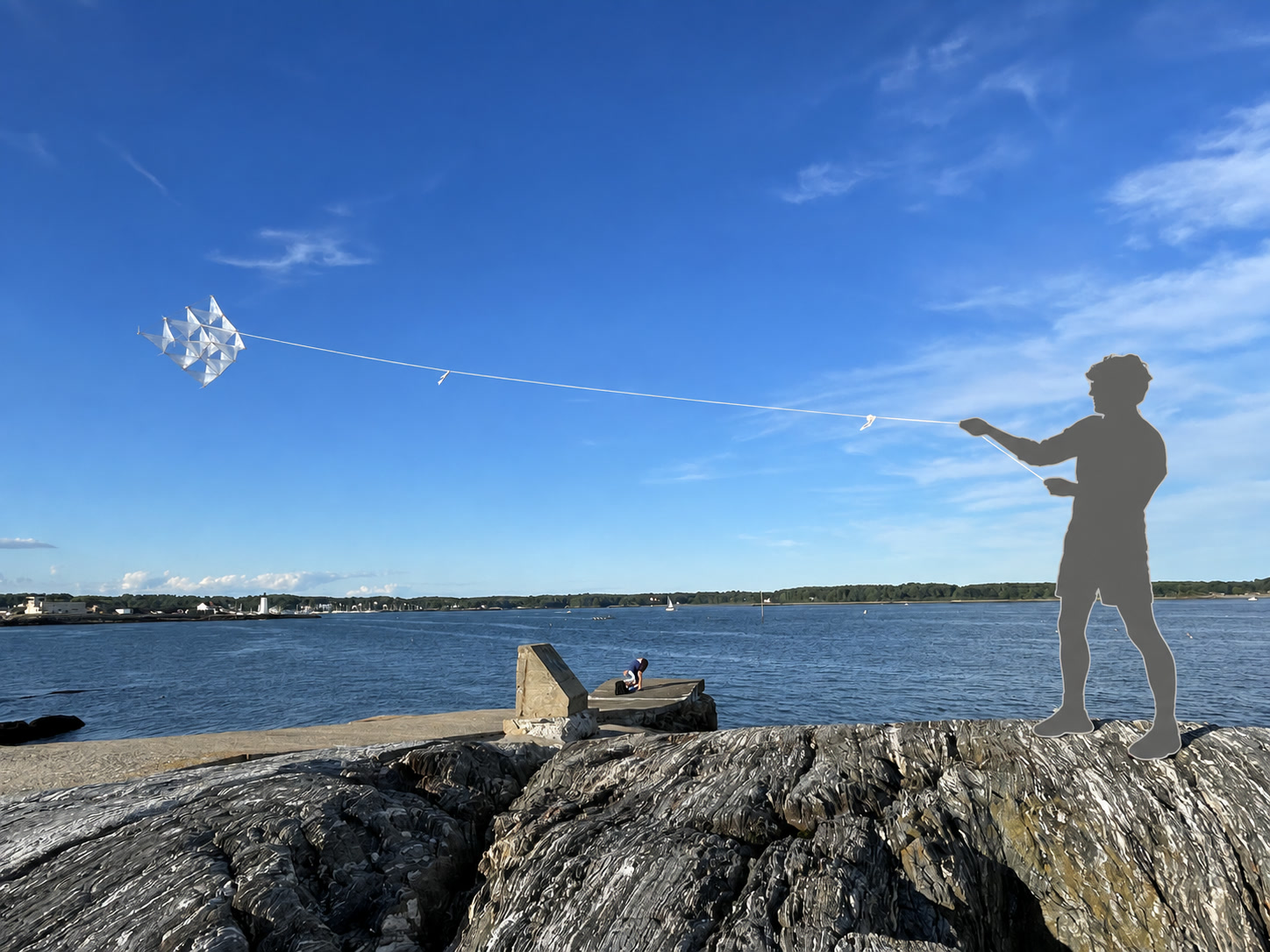
Early experimentation begins in 2022, when Prototype Zero flies, briefly but majestically, on one July afternoon in New England.
Prototype Zero features a simple, ten-cell design. This is deemed small enough to be buildable but large enough to be interesting. Materials are sourced from a hardware store and assembly takes about a day.
EDGES    Wooden dowels
JOINTS   Fuel line; zip ties
SAILS    0.31 mil HDPE painter’s plastic, tape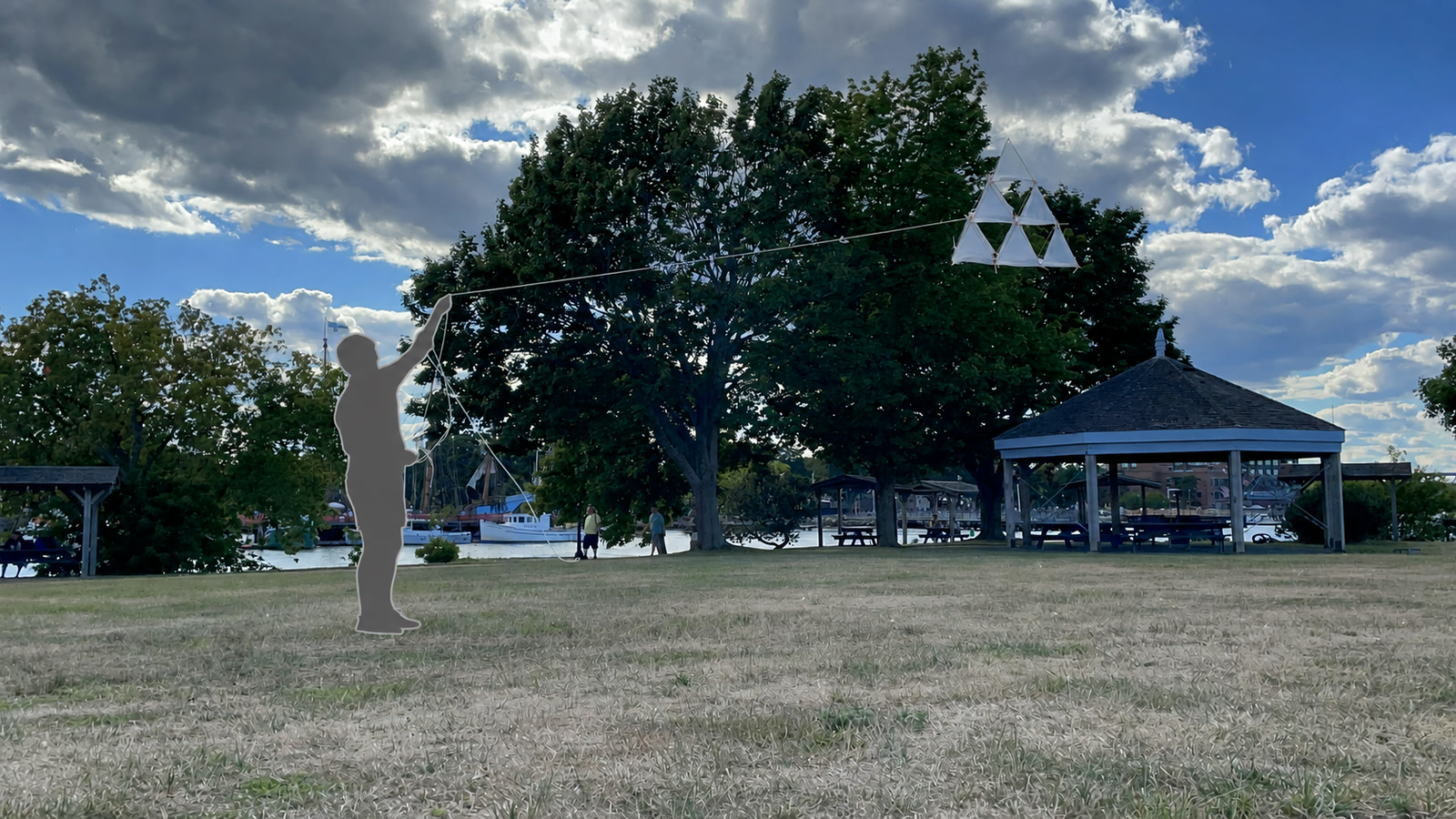
Observations
The kite flies and hangs with a remarkable stability. If you have a handmade pile of kite that looks plausibly like a runaway grocery bag, people ask you questions. Running a kite in the park is difficult if you are in any way self-conscious. Prototyped kites crash hard and often. Wooden dowels are not ideal.
Notes
The primary virtue of Prototype Zero is that it introduces, at one higher level of resolution, several meaningful difficulties with the project.
The first is the joinery. For joints in the middle of the kite, nine edges must converge. This joint must be both rigid enough to keep the kite in shape, flexible enough to absorb some impact of crashing, sizable enough to prevent spontaneous mid-air disassembly, and yet light enough to allow the kite to actually fly. I begin to suspect that the construction difficulty of this joint is probably a meaningful reason why Bell kites are not a staple in every household.
The second difficulty is more general: prototyping things that fly is not for the faint of heart. The crashes are often sudden, catastrophic and surprisingly uninformative. Is the bridle wrong, is the frame too flexible, are the sails badly shaped, is the wind simply unhelpful? There are too many variables, and when something breaks it is difficult to suss out if you are just barely missing the mark or completely off the boil. Unless you know a great deal about wind—and I, admittedly, do not—the fluid dynamics of it seem very complicated.
Prototype One
Experimentation resumes in 2025. Prototype One flies moderately, beautifully, explosively on several January afternoons in California.
Prototype One is a redux of the original ten-cell design. The differentiating idea is having a real go at the joint, which is now a rubber, injection-molded thing that looks a bit like an anemone. The idea is that the rubber functions like the fuel line: its slightly smaller radius providing both friction and suction to hold the edge in place. The sails also get a buff, with hand-sewn sheets that wrap around the edges replacing the masking-tape-thin-plastic flappy-ness of Prototype Zero.
EDGES    Carbon fiber
JOINTS   Rubber
SAILS    Ripstop fabric and thread
Observations
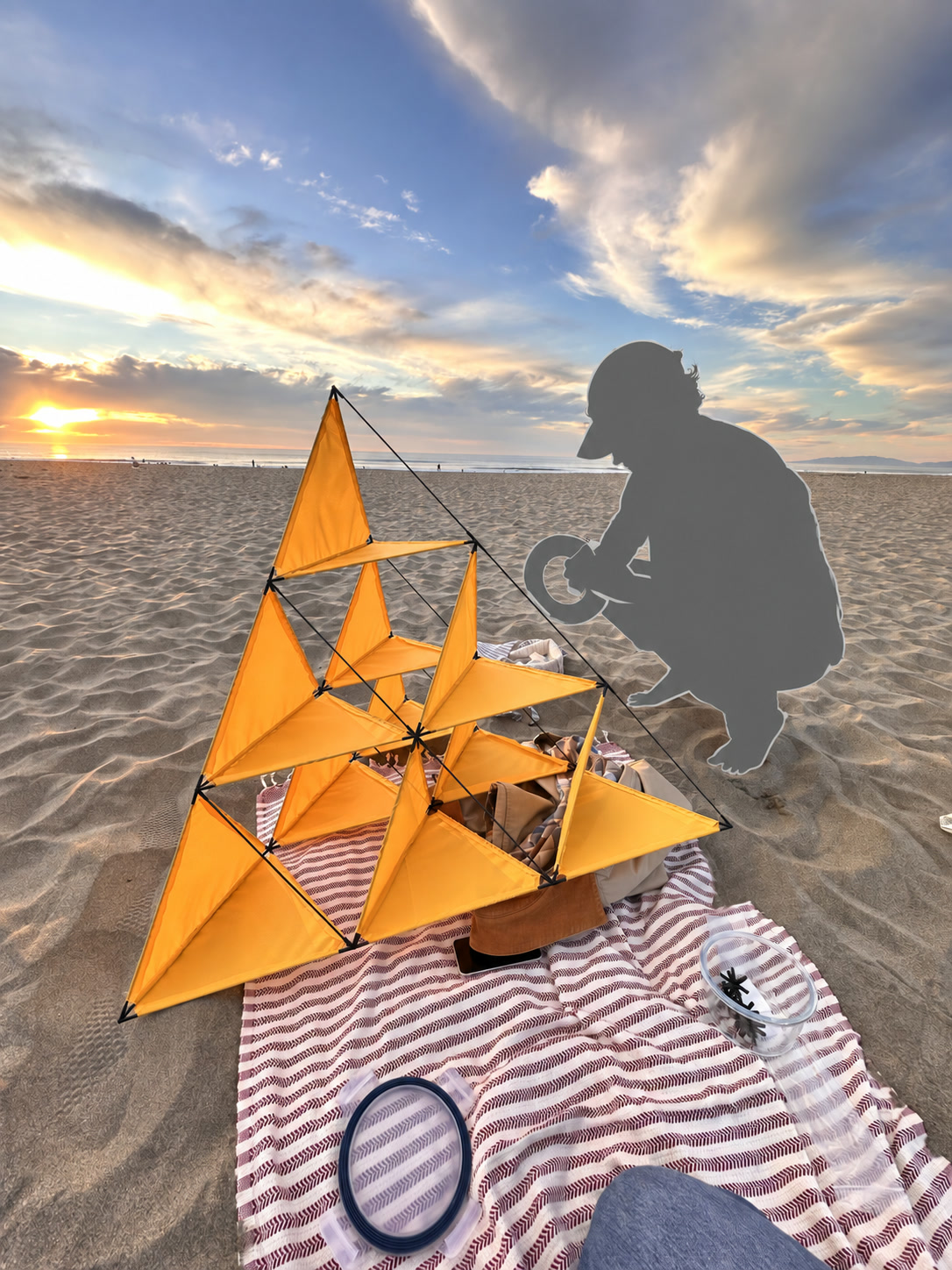
It is easier to run the kite in the afternoon on Ocean Beach than in a crowded park. The kite jostles in the turbulent breeze off the Pacific as the sun creeps down toward the horizon. I realize I actually have no clear idea what the best attachment point for the string is. Given the asymmetry of the sails, there are a lot of permutations. On one of the last kite runs of the afternoon, the bottom vertex is revealed to be the most stable. Several two-to-three minute flights ensue. There is much rejoicing.
In the following week, the cron job on my server finally pings me: big winds in a park near me! With the string in the lowest joint, the kite soars into the air. However, because the edges are only held loosely by the joints, this force is enough to cause a Sudden Airborne Disassembly. The result of the SAD is that a pathetic-looking crumple of material floats past several eucalyptus trees and lands in traffic. Most of the material is able to be retrieved.
Notes
The new joint is a point of pride. It is a magical thing conjured from the facilities of Shenzhen, and it succeeds under a very narrow definition of success. A kite of this shape can fly handsomely at modest wind speeds.
The new joint is also a point of agony. The SAD is a difficult problem to overcome, and I sense that my personal knowledge of materials—plastics, rubbers, and compounds of varying degrees—is now exhausted.
Finally, assembly takes about 45 minutes, which is enough time for doubt to creep in as to whether this is a good use of time at all. This is also obviously unsustainable in the long run. If the project is going to continue, a whole new design may be needed.
Fortunately, the sight of Prototype One soaring above the ocean in the late afternoon is sufficient to inspire the researcher to continue.
Prototype Two
Experimentation continued in 2026. Prototype Two… is in the works.